Showing posts with label Islam in Europe. Show all posts

Thursday, July 16, 2009

Book: Islam in Europe Diversity, Identity and Influence


Edited by Aziz Al-Azmeh
Central European University, Budapest
Effie Fokas
Hellenic Foundation for European and Foreign Policy (ELIAMEP)

Events over recent years have increased the global interest in Islam. This volume seeks to combat generalisations about the Muslim presence in Europe by illuminating its diversity across Europe and offering a more realistic, highly differentiated picture. It contends with the monist concept of identity that suggests Islam is the shared and main definition of Muslims living in Europe. The contributors also explore the influence of the European Union on the Muslim communities within its borders, and examine how the EU is in turn affected by the Muslim presence in Europe. This book comes at a critical moment in the evolution of the place of Islam within Europe and will appeal to scholars, students and practitioners in the fields of European studies, politics and policies of the European Union, sociology, sociology of religion, and international relations. It also addresses the wider framework of uncertainties and unease about religion in Europe.

Contents

1. Introduction Effie Fokas; 2. Christians and Muslims: memory, amity and enmities Tarek Mitri; 3. The question of Euro-Islam: restriction or opportunity? Jorgen Nielsen; 4. Muslim identities in Europe: the snare of exceptionalism Jocelyne Cesari; 5. From exile to diaspora: the development of transnational Islam in Europe Werner Schiffauer; 6. Bosnian Islam as European Islam: limits and shifts of a concept Xavier Bougarel; 7. The regulation of religious diversity by the institutions of the European Union: the case of Islam Bérengère Massignon; 8. Development, discrimination and reverse discrimination: effects of EU integration and regional change on the Muslims of Southeast Europe Dia Anagnostou; 9. Breaching the infernal cycle: Turkey and the European Union Valérie Amiraux; 10. Afterword Aziz al-Azmeh.

Reviews

"Perhaps no mistake is greater in discussion of the contemporary world than the belief that identity is one-dimensional, and fixed, and that, on its own, religion, as part of such identity, can explain social and political behavior. The essays in this volume challenge such simplistic ideas in general, and the particular variant that is applied to Muslims, in the Middle East and in Europe, and as much by Islamist fundamentalists as by western observers. In disaggregating ‘identity’ and in demonstrating the many varieties of ethnicity, context, religious practice, class belonging and political affiliation of the Muslims who live in Europe, Aziz Al-Azmeh and Effie Fokas have produced a book of great relevance to public debate and academic research alike." - Professor Fred Halliday, London School of Economics, author 100 Myths About the Middle East (2005)

"Scholars of European politics, religion and politics, and the politics of Islam will certainly profit from a close reading of this volume. It deserves to influence serearch, teaching, and broader public discussion of the future of Europe and its increasingly heterogeneous societies." --Andrew C. Gould, University of Notre Dame: Comparative Politics Book Reviews

Contributors

Effie Fokas, Tarek Mitri, Jorgen Nielsen, Jocelyne Cesari, Werner Schiffauer, Xavier Bougarel, Bérengère Massignon, Dia Anagnostou, Valérie Amiraux, Aziz al-Azmeh

(Cambridge University Press)

Book: Islam in Europe: Integration or Marginalization?

In this book the author Robert J. Pauly, (Adjunct Professor of Diplomacy at Norwich University, Northfield, VT) looks in detail at the impact of Islam's presence in Europe. He examines five areas of particular importance:

• the effect of the growth of Muslim communities on the demographics of Western Europe generally, and France, Germany and the United Kingdom in particular;
• the consequences of the marginalization of Muslims on domestic and international security within and outside of Western Europe in the post-11 September 2001 era;
• the impact of the issue of Islam in Europe on the European Union's ongoing deepening and widening processes
• the potential correlation between the increased visibility of Islam in Europe and the growth of far-right political parties across the continent;
• and the broader relationships between the issues of Islam in Europe, Islam and Europe, and Islam and the West.

The main theses of Pauly are the need for a local approach in the short term and the implementation of projects at the regional, national and supranational levels in light of local experiences. The author is convinced that the present societal divide between Christians and Muslims in Europe could be overcome by developing an "inclusive society with room for a European brand of Islam", if not a "hybrid Euro-Islamic identity".
(Eurac.edu)

Wednesday, July 15, 2009

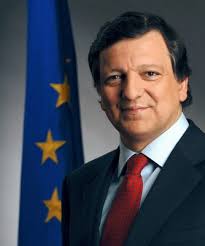
Barroso: Islam is part of Europe

BRUSSELS , May 5 (KUNA) -- The President of the European Commission, Jose Manuel Barroso, underlined here Monday that Islam is part and parcel of Europe and he also condemned the concept of clash of civilisations.
"Islam today is part of Europe. It is important to understand this.One should not see Islam as outside Europe. We already have an important presence of Islam and Muslims among our citizens," Barroso told a press conference this afternoon after an informal dialogue between EU leaders and around twenty high-level representatives of Christianity, Judaism and Islam in Europe.
"We can be a European citizen being a Christian, being Jewish or Muslim or having no religion," he noted.
On his part, the Grand Mufti of Bosnia-Herzegovina, Dr.Mustafa Ceric, said Islam is indeed part of Europe but unfortunately Turkey is not yet part of Europe.
"Following this logic Europe has to prove that Islam is part of Europe by not delaying the acceptance of Turkey to the EU," Ceric told the joint press conference.
Many people in Turkey and the Muslim world believe that Turkey will not be accepted as an EU member because it is a Muslim country.
Mondays meeting was co-chaired by European Commission President Barroso, Slovenian Prime Minister and current President of the European Council, Janez Jansa, and the President of the European Parliament, Hans-Gert Pottering.
This year's meeting focused on two major challenges facing the European Union: Climate Change and Reconciliation.
This was the fourth such annual meeting with religious leaders and the second involving the Presidents of the three EU institutions. The initiative was launched by President Barroso in 2005.
Barroso said that the inter-faith dialogue proved that "preachers of clash of civilisations are wrong".
Janez Jansa told reporters that "the environment is not only natural but also a sacred place. Community and loalty between man, nature and the Creator is a basic principle of Judaism, Christianity and Islam alike".
Slovenia, he said, would like to create an Euro-Mediterranean university which will be a meeting place for young people coming from the Christian, Muslim and Jewish world.
A charter will be signed on 9 June in Slovenia, which holds the current EU Presidency, on creating this new university.
EP President Pottering said "intercultural dialogue is an important contribution to the European Union's relations with its neighbouring countries, in particular in the Mediterranean region".
He noted that since the EU has declared 2008 as the European Year of Intercultural Dialogue, the high-level meeting is a welcome opportunity to focus o on the topic of "Reconciliation through intercultural and inter-faith dialogue".
Source: Kuwait News Agency web-site

Sunday, July 12, 2009

Why Europe needs Islam


Why Europe Needs Islam is a session held in Birmingham and London on January 15th and 17th 2008.
Link

Europeans.ws: Valuable Web-site about Indigenous European Muslims


Valuable web-site where you can find a lot of information about indigenous European Muslim peoples, and many information about new European Muslims:
Europeans.ws

European Muslims Show No Conflict Between Religious and National Identities


Surveys in London, Paris, and Berlin indicate resident Muslims at least as likely as general public to identify with country
by Zsolt Nyiri, Ph.D.
Regional Research Director for Europe, Gallup World Poll

GALLUP NEWS SERVICE

PRINCETON, NJ -- There are two extreme viewpoints on the issue of Muslim integration into Europe. On the one hand, Muslims are accused of resisting peaceful integration into European society, as evidenced by events such as the bombing in London and the riots in France in 2005. On the other hand, Europeans are accused of being increasingly hostile toward Muslims and other immigrants, as evidenced by the popularity of European anti-immigration parties or the growing number of legislative attempts to limit the use of religious symbols, including the veil worn by Muslim women.

Poll results provide very limited support for either of these extreme positions. Rather, our data reveal that, while religion remains an important part of their identity, Muslim residents of London, Paris, and Berlin also identify strongly with the country in which they live. In all three cities, strong majorities of Muslims -- 68% in Paris, 85% in Berlin, and 88% in London -- say religion is an important part of their lives. These figures stand in stark contrast to those found among the general population: only 23% of French, 36% of British, and 41% of German respondents overall consider religion to be an important part of their lives.

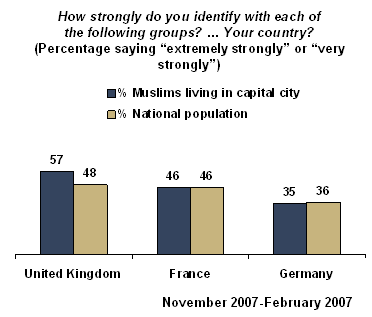
However, the idea that their higher religiosity implies a weaker sense of national identity is simply false. In London and Paris, when Muslims were not forced to choose between religious and national identity, they tended to associate themselves with both. In fact, in none of the three countries were Muslim residents significantly less likely than the populations at large to say they identify strongly with their country. (In the United Kingdom, they were actually somewhat more likely to do so).

Gallup.com

The Euro-Muslim Network

The European Muslim Network - EMN is a Think Tank that gathers European Muslims intellectuals and activists throughout Europe. They aim at fostering communication, views and expert analysis on the key issues related to the Muslim presence in Europe.

The EMN is designed to provide a space of encounter and discussion for Muslims and non-Muslims organizations, NGOs, stakeholder groups and policy makers to produce practical recommendations for action of common concerns in a multi -constituency approach.

The EMN ensures a substantial contribution through interaction with the European level and the grass roots level Muslims organizations on the fast-moving debates regarding Islam in Europe.

They aim at being vocal and creative to play their part to "challenge the present and change the future...".

Euro-Muslims.eu

Saturday, July 4, 2009

Political Islam and Europe


Analysis

Published: Tuesday 17 April 2007

Lack of EU engagement with democrats in the Middle East and North Africa could lead to distrust, argue twoCentre for European Policy Studies (CEPS) working documents.
In 'Political Islam and Europe – Views from the Arab Mediterranean states and Turkey' Robert Springborg argues that the social, political and economic power of moderate Middle East and North African Islamist movements has been growing for a generation or so.

The question of how to deal with Islamists who reject violence, embrace democracy and outperform their competitors at the polls has therefore become a central concern not only of incumbent Middle East elites, but also of interested foreign actors such as the EU and US.
Springborg urges the EU to clarify its policies towards the MENA region and its Muslim democrats, arguing that "the present lack of EU policies on engaging with moderate Islamists leads them to be at best curious about the EU and at worse to be suspicious of it".

In parallel, 'Political Islam in Turkey' authors Senem Aydin and Ruşen Çakir find that Turkey differs from the Arab states studied not only in enjoying an EU membership prospect, but also in the fact that a broadly Islamist-oriented party has been in office since 2002.

However, the growing mistrust towards Europe as a result of perceived discrimination and EU double standards is beginning to cloud positive perceptions within the party. Decreasing levels of support for EU membership in Turkish society and the fact that explicitly eurosceptic positions are coming now from both the left and right, suggest that the sustainability of the pro-European discourse could be difficult to maintain.
Source

Wednesday, July 1, 2009